
Remanufacturing a VW Golf 2 Throttle Lever with 3D Scanning and PA12-CF15 Printing
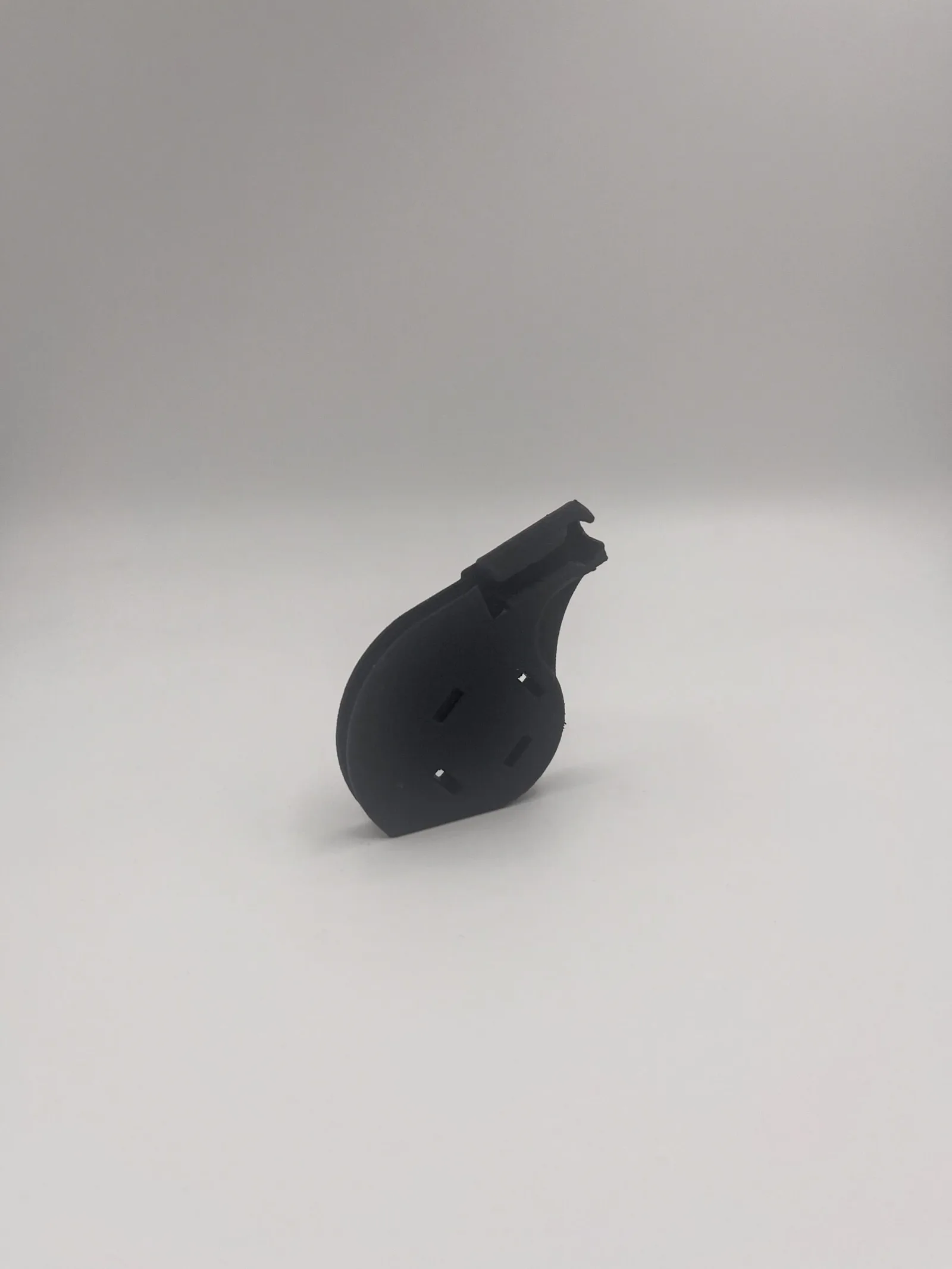
One of the automotive industry’s recurring challenges is sourcing discontinued or no-longer-available parts — whether for classic vehicles, custom machines, or small repair jobs. In these cases, traditional parts manufacturing (injection tooling, small-batch casting) is often too expensive, too slow, or simply doesn’t pay off. The Volkswagen Golf 2’s throttle lever is a typical example: no longer mass-produced, no factory replacement available — but the combination of 3D scanning, CAD reverse-modeling, and 3D printing makes it possible to turn the original into an accurate digital model, and from there into a functional, durable part that can even outperform the original. This project walks through that process step by step.
1. Digitizing the Throttle Lever with 3D Scanning
The throttle lever contains a number of complex geometric elements — curved surfaces, varying cross-sections, bores, mating connections, a Bowden cable groove — that would be extremely time-consuming and imprecise to measure by hand. That’s why we chose 3D scanning: we digitized the part with a RevoPoint POP 3 infrared 3D scanner, a cost-effective, fast solution that met the accuracy the project required. The goal wasn’t laboratory-grade precision, but a high-resolution geometric foundation sufficient for the reverse-modeling that followed.
- Mounting the part and scanning it from multiple angles
- Aligning the point cloud and generating a mesh model
- Fixing errors, then producing a high-accuracy STL model with the complete geometric information
2. Reverse-Modeling: CAD Design
The scanned STL alone isn’t suitable for professional manufacturing — reverse-modeling builds a parametric CAD model from the scanned surface. This isn’t simple copying: the designer rebuilds the entire geometry, corrects errors caused by wear, optimizes dimensions, and accounts for the chosen manufacturing technology.
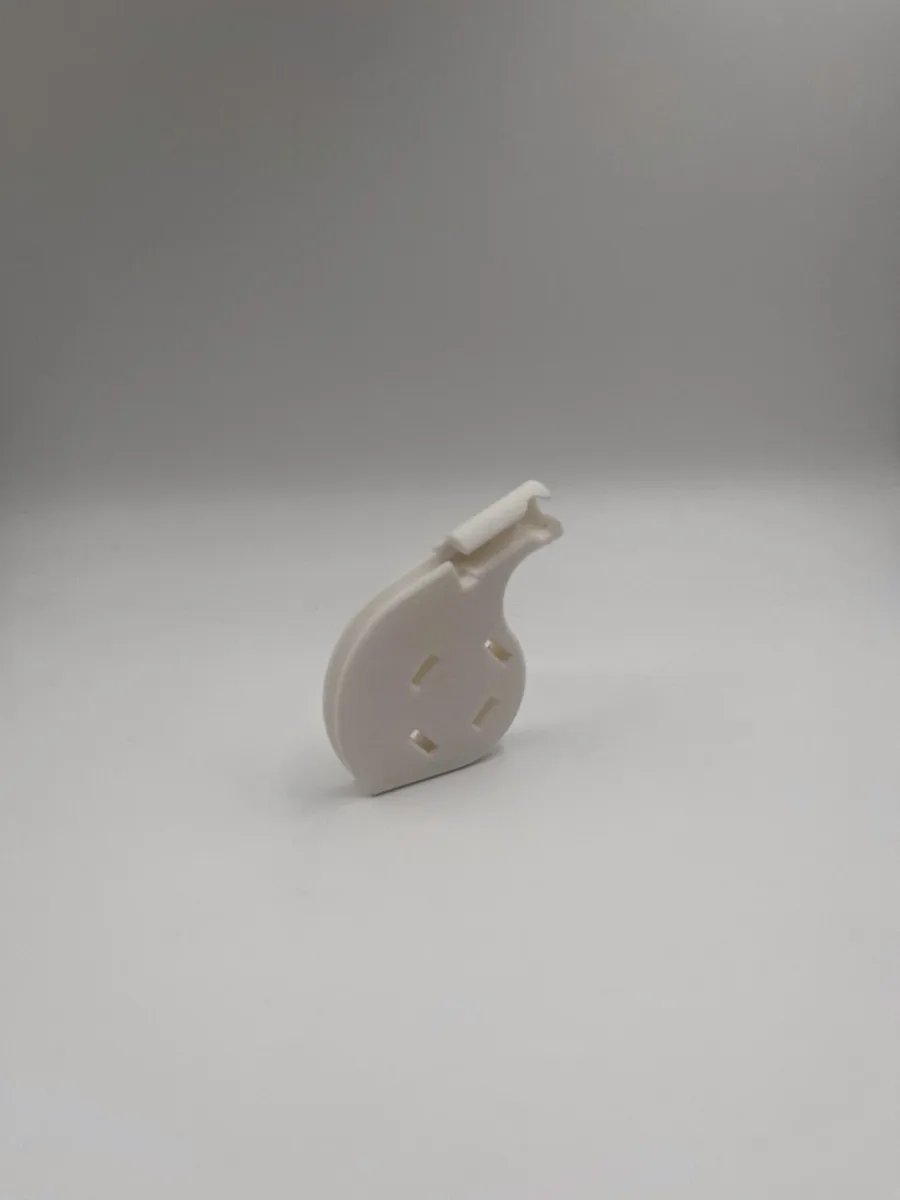
Before using the final material, we printed a first prototype in Creality Hyper PLA, which let us compare the critical dimensions — curves, bore positions — against the original, and test-fit it onto the carburetor to check the fit. On a second, more detailed version we refined the Bowden cable groove and the mounting points, then finalized the design based on client feedback. Since we were designing for 3D printing, we modeled the structure thicker than the original, adding ribbing at the highest-load, fracture-prone lines — while preserving the underlying geometry so the function wouldn’t be compromised.
3. Material Selection and FDM Manufacturing
The client had three main requirements: high heat resistance, strong mechanical properties, and chemical resistance. PLA is an excellent prototyping material, but not suitable for engine-bay use — its heat resistance is low, its impact resistance limited, and it can deform over time, so we used it strictly for dimensional checks. The final part was made from Fiberlogy PA12-CF15, a carbon-fiber composite also used by automakers themselves for engine-bay components:
- ~175°C heat resistance for the engine-bay environment
- Excellent stiffness and mechanical strength, good wear resistance
- Resistant to engine oil, hydraulic fluid, greases, and fuels
- Low warping, which is critical for dimensional accuracy
We manufactured the part using FDM with a 0.2 mm layer height, a 0.4 mm nozzle, 100% infill, and a print orientation optimized for the resulting mechanical properties. After support removal and deburring, we test-fitted the part — the carbon-fiber surface gave it a distinctive look and effectively hid the layer lines too.
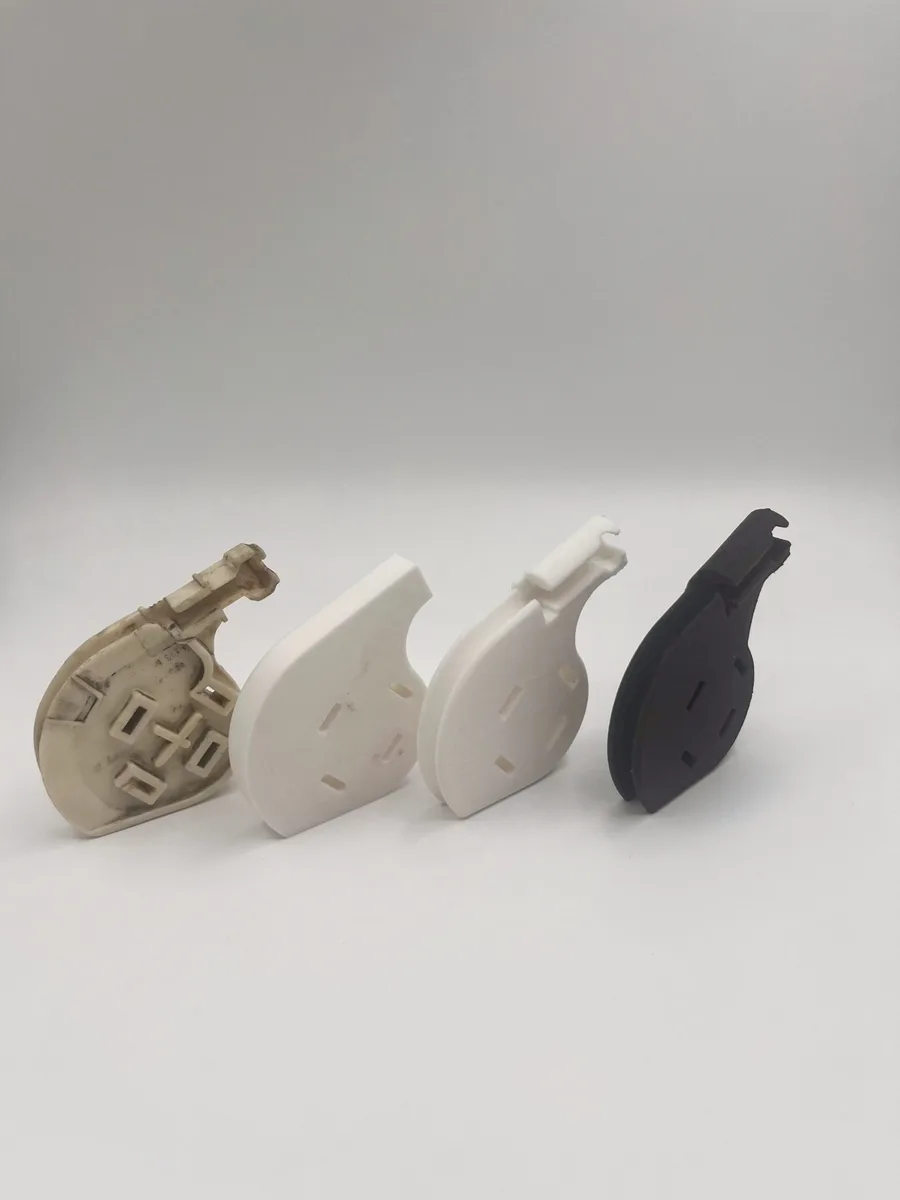
The end result surpassed the original part both functionally and aesthetically.
When Is Reverse-Modeling the Right Choice?
Reverse-modeling is especially well suited to cases where the original CAD file no longer exists, the manufacturer is gone, the part is discontinued, or only a damaged sample is available — as we cover in detail in our article on how 3D printing works. The method isn’t limited to automotive work either: the same workflow applies to production-line machine parts, robot cell components, agricultural equipment, or lab equipment — anywhere an existing but undocumented part needs to become manufacturable again.
Summary
Remanufacturing the Volkswagen Golf 2’s throttle lever shows how a part that’s no longer available can become fully usable again: we digitized the original with 3D scanning, built a parametric CAD model through reverse-modeling, checked the fit with a PLA prototype, reinforced the design, and finally manufactured the finished part with FDM 3D printing in PA12-CF15 carbon-fiber composite — a part that doesn’t just replace the original, but in some respects surpasses it in mechanical properties and durability. If you need to remanufacture an old or custom part, get in touch for a quote on our industrial 3D scanning, design, and printing services — we handle the full process through our parts manufacturing service.
Related Articles
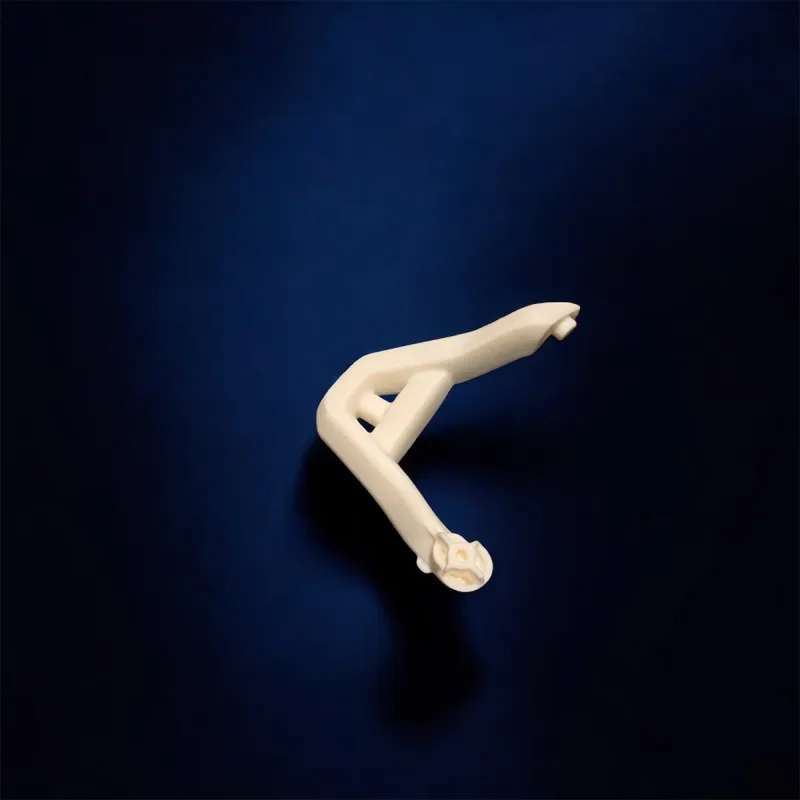

Planning a Similar Project?
Send us your model or drawing — free consultation, with personalized quotes within 24 hours.