
ASA Vapor Smoothing: How Do You Get Rid of Layer Lines?
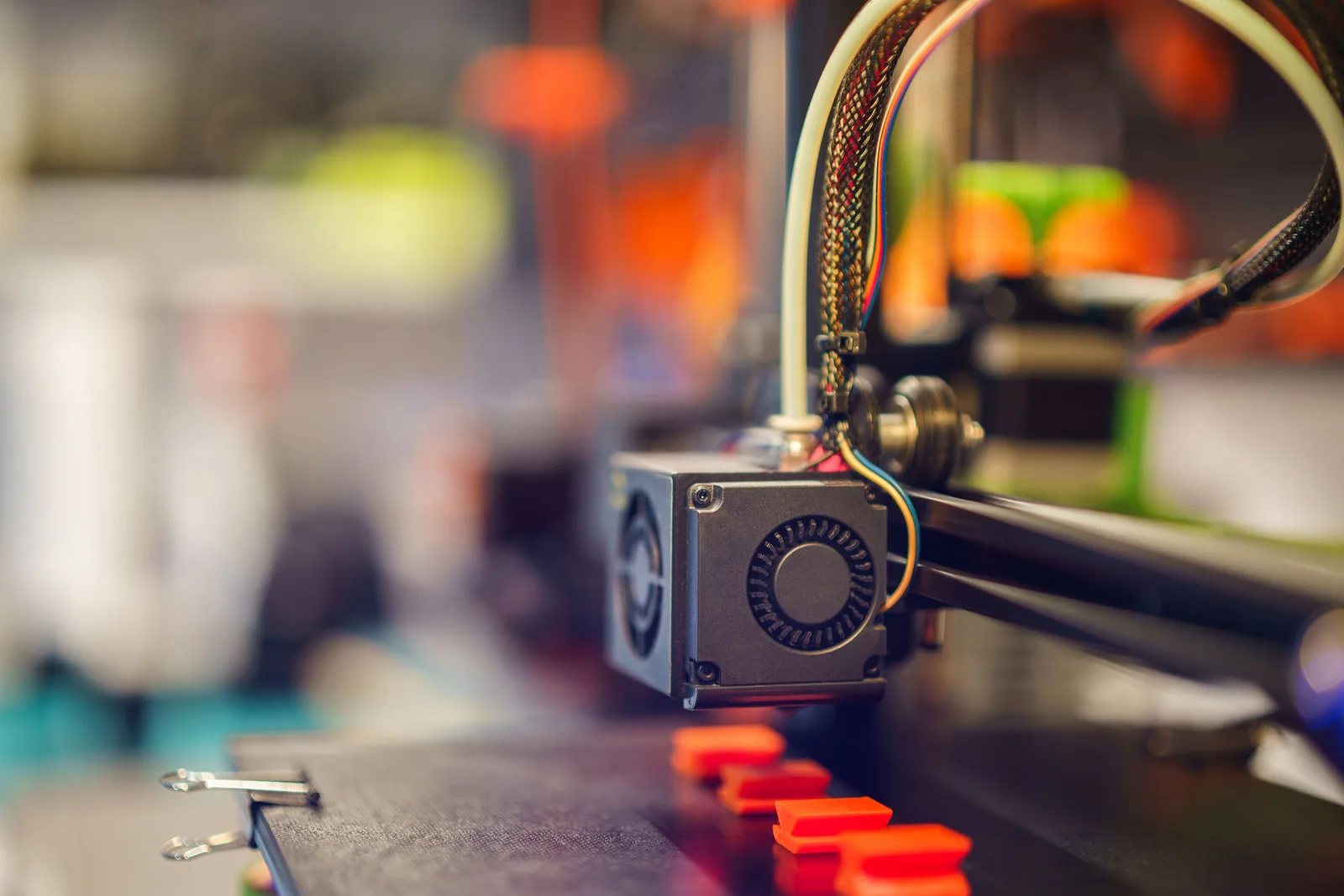
If you’ve printed a part in ASA but the typical layered, FDM-style surface bothers you, chemical surface treatment is an obvious option to consider. ASA behaves in a specific way with certain solvents: the surface can be partially dissolved, then re-solidifies once the solvent evaporates.
Vapor smoothing takes advantage of exactly this — under properly controlled conditions, it can significantly reduce the visibility of layers and produce a much more even surface.
The method isn’t as simple as “just put the ASA part in solvent vapor,” though. Chemical surface treatment depends on the part’s geometry, size, and wall thickness, on the solvent used, and on how long the process runs. ASA print quality is already shaped by a number of factors before it even gets to post-processing — we cover this in more detail in our earlier article on ASA layer adhesion and the role of an enclosed chamber.
What is ASA, and why is it suited to vapor smoothing?
ASA (acrylonitrile styrene acrylate) is an amorphous thermoplastic, commonly used as an outdoor-grade alternative to ABS in many applications.
One of the material’s key advantages is that its polymer structure makes it soluble or swellable with the right solvents, which allows a controlled chemical effect to be created on the surface.
In FDM printing, a part’s surface isn’t homogeneous: microscopic geometric differences remain between the printed strands and layers. These differences produce what’s known as a layer line.
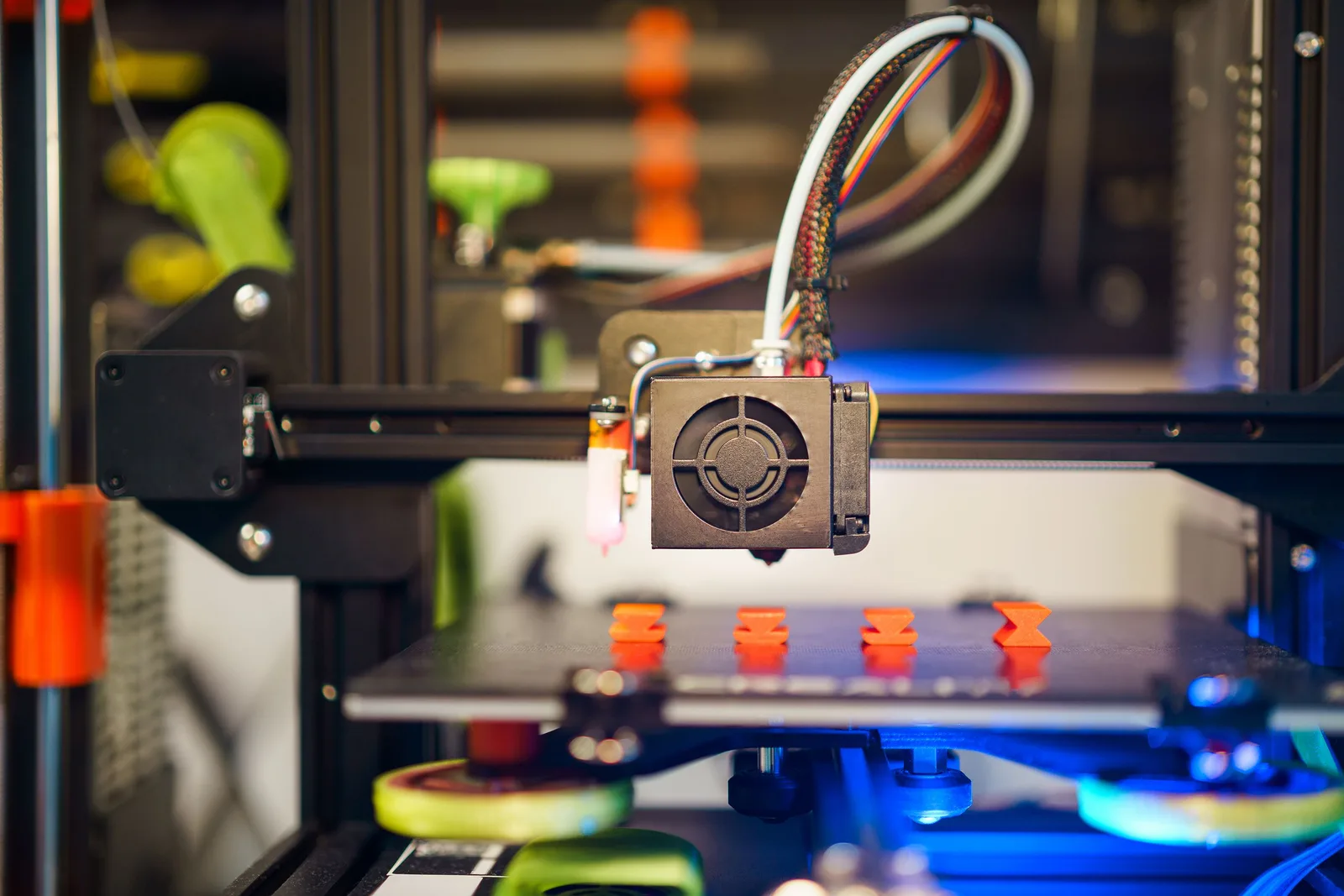
During vapor smoothing, a very thin layer of the treated surface softens or partially dissolves. Surface irregularities are partly evened out, and once the solvent evaporates, the material solidifies again.
The key difference is that this isn’t mechanical polishing: the surface isn’t removed — the outermost layer is chemically modified.
ASA vs. ABS: similar principle, but not quite the same
ASA is often treated as an alternative to ABS, and to some extent that holds for surface treatment too. Both are amorphous thermoplastics, and both can be suitable for solvent-based surface treatment.
There are significant differences between the two materials, though. One of ASA’s key advantages is better UV and weather resistance, which can be an edge for outdoor parts in applications where ABS ages faster under long-term UV exposure. (For more on when ASA — versus another UV-resistant material — is the better choice for outdoor parts, see our earlier article: UV-Resistant vs. UV-Stable 3D Printing Materials for Outdoor Use.)
Their mechanical and thermal behavior is similar but not identical, so it’s not a good idea to copy a surface-treatment process tuned for ABS straight over to ASA. With chemical treatment in particular, material and solvent compatibility needs to be checked separately, and formulations can differ between filament manufacturers.
How does chemical surface treatment work?
The principle behind vapor smoothing is relatively simple. The part is placed in an environment where vapor from the chosen solvent comes into contact with the plastic surface. The solvent diffuses into the outermost layer of the polymer and changes its state.
At that point, the surface:
- softens,
- may partially dissolve,
- and smaller irregularities tend to even out.
The solvent then evaporates, and the surface solidifies again. The goal isn’t to “dissolve” the entire part — it’s to treat only the outermost surface layer.
That’s why treatment intensity is one of the process’s most important parameters. Too short a treatment barely changes the layer lines. Too long a treatment, on the other hand, can start affecting not just surface smoothness but the geometry itself.
What can ASA vapor smoothing actually achieve?
Done properly, surface treatment can improve several things at once.
A noticeable reduction in layer lines
The most obvious result is usually smoother surface layers. After treatment, the object looks less like a typical FDM print, especially on surfaces where layer lines were previously strong.
It’s important to note, though, that “removing layer lines” doesn’t automatically mean a perfect, injection-molded-like surface. Print defects, larger geometric irregularities, and certain seams can still be visible after treatment.
A more attractive, uniform surface
Smoothing is especially useful when the part is a visible enclosure, prototype, model, device housing, or any other element where surface quality matters. The treated surface can be more visually and tactilely uniform.
Improved surface density
For certain geometries, partial sealing of surface pores and small openings is also achievable. That doesn’t mean any arbitrary FDM part automatically becomes liquid- or gas-tight, though — density depends on the base material, print parameters, wall thickness, internal structure, and the surface treatment itself. So the claim “vapor smoothed = airtight” would be too strong.
Vapor smoothing’s biggest drawback: dimensions can change
The chemical process that smooths the surface is exactly what changes the outermost part of the material. This means the process can also have a geometric effect.
Rounded edges can change, very fine details can lose their sharpness, and holes and grooves can shift in size. The more aggressive the treatment, the greater this risk.
This matters especially for fitted, functional parts. On a decorative panel, a change of a few tenths of a millimeter might be irrelevant. On a bearing seat, a connector, or a precision fit, the same change can be a serious problem.
Fine details are especially sensitive
Thin walls, sharp ribs, fine text, and small holes are more prone to change. After treatment, it’s worth checking the critical dimensions directly, rather than judging the result by eye alone.
Deformation is also possible
Because of the surface softening that occurs during chemical treatment, parts that are poorly supported, large, or thin-walled can deform. This is especially problematic for:
- large flat surfaces,
- thin housings,
- long, narrow parts,
- geometries that already carry residual internal stress.
FDM manufacturing can already introduce internal stress due to temperature changes during printing. Surface treatment doesn’t necessarily eliminate these issues — for some geometries, it can actually make warping more visible.
What about doing vapor smoothing at home?
Chemical surface treatment is technically possible in a home setting, but two things need to be kept very separate here: whether it works, and whether it’s a safe, reproducible technology.
Solvent vapors can pose serious health and fire-safety risks. Experimenting in a poorly ventilated room doesn’t count as an industrial process.
On top of that, it’s hard to reproduce the exact same process with simple, DIY setups. If you want to make ten copies of the same part, it’s not enough for the first one to “come out nice” — the goal is for all ten to have near-identical surface quality and geometry. That’s already a matter of process engineering.
Why is this hard to do at an industrial level?
In an industrial setting, controllability is one of the most important aspects of surface treatment. It’s not just about what material the part is made of — it also matters:
- what the print settings were,
- what the wall thickness is,
- what the geometry looks like,
- how long the solvent is in contact with the surface,
- what environmental conditions the treatment happens under,
- what surface quality needs to be achieved,
- what dimensional tolerances are allowed.
At this point, the goal isn’t simply a “nicer surface” — it’s a repeatable production process. This risk isn’t unique to vapor smoothing, either — other post-processing steps, such as UV post-curing on resin prints, carry similar process-control risks (see our article on resin print supports tearing after UV curing).
In a well-defined process, printing and surface treatment are part of the same system. Critical dimensions can even be accounted for as early as the CAD model and the print-process planning stage.
Not every part is worth vapor smoothing
Vapor smoothing is a visually impressive technology, but it isn’t a universal solution. It’s not necessarily the right choice if:
- very tight dimensional tolerances need to be maintained,
- sharp, small-scale details are required,
- the surface needs different mechanical or chemical properties,
- the part’s geometry is prone to deformation,
- only a few critical surfaces actually need improving.
In these cases, other 3D printing surface treatment methods may be worth considering instead — mechanical sanding, priming and painting, various coatings, or other post-processing techniques suited to the specific material. Which process is right always depends on the primary goal: appearance, feel, dimensional accuracy, density, chemical resistance, or part quantity.
Good surface quality actually starts at the printing stage
It’s also worth keeping in mind that surface quality can’t be fully separated from the print technology itself. Layer height, print speed, cooling, wall count, print orientation, outer wall quality, and seam placement can all produce different results.
Vapor smoothing won’t turn a poorly printed or defective part into a perfect one. Chemical surface treatment doesn’t replace proper manufacturing technology — it’s an additional step to make an already properly made part’s surface even better.
When is ASA vapor smoothing worth choosing?
The method is particularly interesting when:
- You want to manufacture a larger part quickly and economically with FDM, but better surface quality matters.
- You’re producing a visible enclosure or housing where layer lines would be distracting.
- Volumes are low to medium, and an expensive injection mold isn’t justified — we cover when investing in an injection mold doesn’t pay off in more detail in an earlier article.
- The part’s geometry and tolerances can accommodate the dimensional changes surface treatment introduces.
- The goal isn’t just a prototype, but an aesthetically presentable end product or low-volume part.
In cases like these, combining ASA, FDM, and post-processing can be a genuinely interesting production alternative.
Vapor smoothing isn’t “magic” — it’s a manufacturing step
One of ASA vapor smoothing’s biggest advantages is that it lets you pair FDM printing’s speed with a significantly more even surface.
The process comes with trade-offs, though. The more you smooth the surface, the more important dimensional change, detail loss, and deformation control become. That’s why it’s worth treating surface treatment not as a standalone trick, but as part of the full manufacturing process.
If it’s purely a decorative piece, the focus can mostly be on appearance. For a functional industrial part, though, the CAD geometry, print parameters, tolerances, and post-processing all need to be planned together. That was exactly the engineering call on a motorcycle fog-light bracket we remanufactured: since the precise dimensions of the part’s mounting points and mating surfaces were the critical factor, we didn’t apply any chemical surface treatment afterward — the goal was an accurate fit, not a visually perfect surface. The reverse holds too: on a purely decorative, non-fitted enclosure, the risk that comes with vapor smoothing is a much easier trade-off to accept.
At BWE, these post-processing considerations are part of the manufacturing process alongside industrial 3D printing itself. With FDM or MSLA printing, the question isn’t just how to produce the part — it’s also what surface, dimensional accuracy, and final appearance it needs to achieve. This matters even more once a part moves from a single prototype to low-volume production: the right material, print technology, and surface treatment together deliver the intended result.
Summary
ASA vapor smoothing can effectively reduce layer lines and produce a more even, attractive surface, but it isn’t risk-free — dimensional change, detail loss, and deformation can be a serious problem on functional, fitted parts. That’s exactly why surface treatment is worth planning as part of the full manufacturing process — geometry, print parameters, tolerances, and post-processing together — rather than as a standalone trick. If surface quality and dimensional accuracy both matter for your industrial 3D printed parts, request a quote for our parts manufacturing service — our engineering team can help you decide when chemical surface treatment is worth it, and when a different post-processing method makes more sense.
Related Articles
Planning a Similar Project?
Send us your model or drawing — free consultation, with personalized quotes within 24 hours.